
“Your vibe attracts your tribe”: How Louise Dale is building hope and whānau inside the Otago Corrections Facility (OCF) in Milton.
For Louise Dale, working at the Otago Corrections Facility is more than a job; it is an opportunity to help people rebuild their lives. Through her Whānau, Community and Social Services apprenticeship with Careerforce, she has discovered not only new skills and understanding, but a deeper sense of purpose in her mahi.
When Louise (corrections officer) walks through the gates of Otago Corrections Facility each morning, she brings with her something more powerful than routine: she brings empathy, understanding, and care.
Louise is currently completing her Whānau, Community and Social Services apprenticeship through Careerforce. She says the programme has deepened her skills, strengthened her relationships with people in prison, and transformed the way she sees herself and her work.
“I started the apprenticeship to continue and advance my learning,” Louise says. “I wanted to understand the men we work with more deeply and have more tools to support them in their rehabilitation journey.”
Learning that changes more than one life
For Louise, one of the most valuable lessons from the apprenticeship has been the focus on self-reflection.
“It gave me the chance to look at where I was at, what I was doing, and how I could work better on myself,” she says. “And when I work better on myself, that reflects on how I care for the men.”
That growth has had a ripple effect. Louise recalls one moment with a man who had spent much of his life dealing with challenges through violence.
“He had been declined from a job, his confidence was low, and he was frustrated. I had just finished the self-reflection module, and I said to him, ‘You cannot change the past, but tell me, what makes you happy? What is one positive thing in your life?’”
Weeks later, he came back to her and said that the conversation had changed something. “He told me he started focusing on that one positive thing, and then good things began happening for him. That is when I realised how powerful the little things we say can be.”
Cultural awareness and respect
Another key part of Louise’s learning through her apprenticeship has been strengthening her understanding of cultural identity and the Treaty of Waitangi.
“I’d learnt about the Treaty years ago, but this time it really sank in,” she says. “It gave me confidence to have meaningful conversations with the Māori men about their history, what’s happening in the country, and how they feel about it.”
These conversations have helped build trust and respect.
“I try to use te reo Māori at work, and it is not just te reo, I try to learn greetings and words from different cultures. It is about showing respect and leading by example.”
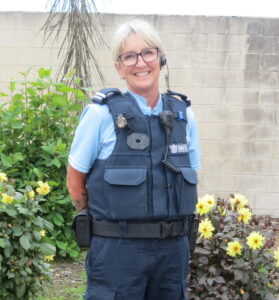
Pictured: Louise Dale
From hairdressing to helping
Before joining the Department of Corrections, Louise worked as a hairdresser for 23 years, ten of those managing a busy salon in Sydney.
“That job taught me a lot about people, how everyone learns and communicates differently,” she says. “But nothing really prepares you for this work. You have to come in, give it a go, and make it your own experience.”
Louise’s empathy also comes from her own lived experiences.
“When I was younger, I played up a bit. I saw a lot of things, drugs, gambling, violence that were just normalised back then,” she says. “Coming into this environment was about understanding that world better and helping others find a way out of it.”
A whānau within the walls
Louise describes the team at Otago Corrections Facility as her “work whānau.”
“We’re not just colleagues; we’re a family,” she says. “We check in on each other all the time and know when something is up. There is a huge sense of belonging; we have all got each other’s backs.”
That sense of whānau is something Louise carries into her work with the men, too.
“For me, whānau is not just blood family, it is about togetherness and belonging. ‘Your vibe attracts your tribe’, that is what whānau means to me.”
Measuring success in small wins
For Louise, success is not about recognition, it is about moments of change.
“There was a man who got parole recently,” she recalls. “We all worked together to make sure his supports were in place, housing, a job, a network. Seeing him walk out with hope and a plan, that’s success.”
Sometimes, the victories are even smaller, a quiet apology, a new way of handling frustration, or someone taking ownership of their choices.
“Those are the moments that remind you this work matters,” Louise says.
Continuing to learn and give back
Louise is committed to ongoing learning and reflection. She regularly seeks feedback from colleagues and leaders to improve her practice.
“People don’t always tell you where you can improve; sometimes you have to ask,” she says. “But that’s how you grow.”
Her advice for anyone considering a Careerforce apprenticeship is simple but heartfelt.
“It might feel overwhelming at first, especially if you haven’t studied in years,” she says. “But just take it one piece at a time. It all falls into place. It’s worth it.”
For Louise, the learning journey is not just about gaining knowledge; it is about giving others hope.
“You can’t change someone’s past,” she says. “But you can help them see there’s a future worth working towards.”
For all media enquiries please the Marketing, Communication & Insights team at [email protected].
Careerforce supports employers across New Zealand’s health and wellbeing sectors to run workplace training programmes, allowing staff to achieve nationally recognised qualifications on the job. For more information, please see: www.careerforce.org.nz
Daisy Hemmingson-White