
When Angela tells people she’s just finished an apprenticeship, she often gets the same surprised reaction.
“An apprenticeship? At your age?”
“Yes,” she smiles. “With Careerforce”
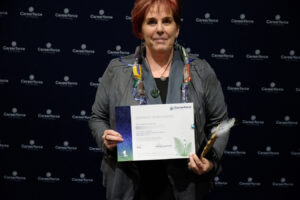
Angela recently completed the Careerforce Apprenticeship in Health and Wellbeing (Level 4) – Peer Support and now continues her work as a Peer Support Worker for Housing First Ōtautahi, supporting some of Christchurch’s most vulnerable people.
What sets her apart is that she doesn’t just offer professional guidance, she brings her own lived experience of recovery to each interaction, walking alongside people who are facing similar journeys.
“We’re not there to fix people,” she says. “We are there to show them that recovery is possible. If I have made it through what I’ve been through, they can too.”
Learning that mirrors real life
Angela began the fully work-based apprenticeship with the goal of formalising her skills and experiences, but she quickly discovered that the programme went far deeper.
“Some of the modules were confronting,” she reflects. “They made me think critically about my own recovery and how my experiences could influence my work. But that reflection also helped me become more self-aware and professional in how I support others.”
She appreciated how the learning encouraged growth through reflection, boundaries, and ethical practice, all vital in peer support work. She also discussed how the programme encouraged self-reflection and helped her identify how her lived experiences could be used safely and professionally in her work.
While studying during COVID-19 brought added stress and isolation, Angela credits the Careerforce Achieve study hubs and her Careerforce apprenticeship advisor, Andy Bunn, for helping her stay connected and on track.
The power of a good mentor
Angela lights up when talking about Andy. “Andy was incredible; calm, patient, and always encouraging. Nothing was ever a hassle for him. He had this great way of helping you think for yourself instead of just giving you the answer.” “Seeing him at my graduation meant the world because he had been such a huge part of that journey. He turned my entire study experience around and helped me believe in myself and my abilities.”
Peer support in action: working with Housing First Ōtautahi
Angela’s role at Housing First Christchurch, part of the Housing First Ōtautahi collective, aligns closely with the peer support model she trained in. The kaupapa is simple yet powerful: housing is a basic human right. Once that foundation is secure, clients or kaewa, as they are respectfully referred to, can begin to rebuild their lives. Angela supports kaewa with a wide range of needs, from securing identification documents and setting up homes, to dealing with trauma, navigating health care, and re-engaging with government services.
“A lot of our kaewa have faced years of distrust and judgment. Peer support lets us connect on a human level. We are equals. That is where the breakthroughs happen.”
Building trust through shared understanding
One of Angela’s most powerful experiences involved a kaewa who had been diagnosed with cancer but was reluctant and hesitant in the lead up to seeking treatment due to past negative experiences with the health system. Angela recognised that his fear was not just about the diagnosis, it was about trust. Angela had faced her own cancer diagnosis in the past and chose to share that with him. “He was scared and understandably so. But I had been there. I knew what he might be feeling and what barriers he could face.”
“I used peer support principles to walk beside him, not ahead, not behind. We started slowly, just by visiting the hospital together so he could get used to the environment. The idea was to reduce the fear of the unknown.”
Over time, they built trust, and Angela became a consistent presence through his treatment. She visited regularly, offering a safe space to talk, decompress, or simply sit in silence. Angela created space for him to share his anxieties and experiences without pressure or judgment. “It was not about me giving advice, it was about listening, empowering, and helping him regain a sense of control over his situation. Sometimes the most powerful thing you can do is simply be present.”
By using the core peer support skills of empathy, consistency, and patience, Angela helped the kaewa navigate one of the hardest journeys of his life on his own terms.
From tent to whare: meeting people where they are at
Another kaewa had lived in a tent for so long that, after receiving housing support, he continued to sleep in the tent on his new front lawn. “He was not ready to go inside — not psychologically. So, we did not force it. We moved the tent into the lounge. Eventually, he transitioned to sleeping on a mattress, then finally a bed. That is peer support in action, meeting people where they are at.”
Angela says it can take eight or nine visits before some kaewa feel safe enough to open up. But once trust is built, the results are transformative.
“It might seem small, but that process represented trust, safety, and progress. That is what peer support looks like; gentle persistence, compassion, and walking alongside someone as they reclaim their sense of home.”
Why the Careerforce apprenticeship matters
Angela believes the Careerforce Peer Support apprenticeship provided the framework she needed to do this work safely, ethically, and sustainably. “The learning helped me understand boundaries, trauma-informed practice, recovery principles, and the value of professional reflection. It gave me the language and tools to complement my lived experience.” She is especially proud that the skills gained from the qualification are recognised and valued by her organisation.
“Our management understands the value of peer support. They involve us, consult with us, and respect our role. That makes all the difference.”
Lessons in trust, boundaries, and empowerment
Angela has developed a personal philosophy of consistency, honesty, and empowerment. She never overpromises and always includes kaewa in the process, whether it is navigating Work and Income forms or understanding how to advocate for themselves.
“Some clients cannot read; others do not trust the system. My job is not to do it for them, it is to support them to learn how to do it for themselves, in their own time.”
She adds that self-care is essential in this work. Recovery is not just for clients; it is ongoing for peer workers too.
“Burnout is real. You need support systems, supervision, and the ability to reflect on your triggers. The apprenticeship taught me how to manage that side of the work too.”
Advice for Future Apprentices
Angela encourages others considering the Peer Support apprenticeship to make sure they are ready and doing it for the right reasons.
“You are not there to fix people. You are there to hold space for them, walk with them, and help them discover their own strength.”
She recommends having a strong personal support plan and reaching out to Careerforce advisors when needed.
“It’s not easy, but it’s one of the most meaningful things you’ll ever do.”
Looking Ahead
Angela sees peer support as a growing and respected field; one she hopes will continue to expand, especially for younger generations.
“I’d love to see peer support embedded in schools, to teach our rangatahi that it’s okay to talk, to ask for help, and to support one another.”
Her journey is living proof of what peer support can achieve, for the worker, the client, and the wider community.
“If I can do it, anyone can. That is the message I try to share every day.”
Interested in completing a Peer Support Apprenticeship?
Turn your lived experience into a professional qualification through Careerforce’s Health & Wellbeing (Level 4) – Peer Support Apprenticeship. Enrolment fees are currently free via the Peer Supporting Training Grant, and employers may also be eligible for Apprenticeship Boost payments of $500/month for eligible first-year apprentices, up to $6,000 per apprentice.
Learn more about Housing First Ōtautahi: housingfirstchch.co.nz
Daisy Hemmingson-White