
Amanda’s Story – Merivale Pharmacy, Christchurch
When Amanda from Merivale Pharmacy attended the APP104c Tikanga and Kawa session at the Careerforce Christchurch office, she was hoping to strengthen her understanding, and confidence in an area that can often feel complex in practice.
What she found was far more than just a classroom session.
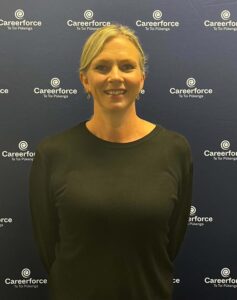
Amanda Chapman at Careerforce’s Tikanga and Kawa session
From uncertainty to clarity
Like many learners, Amanda had previously found some aspects of her study challenging, particularly understanding how to interpret and respond to assessment questions.
While information was available, it didn’t always translate into real understanding.
“You can research it all day long, but you don’t really get the true feeling of what they’re asking until you have someone who knows explain it.”
Through the session, concepts that once felt unclear became accessible. With expert guidance and practical examples, Amanda left with a stronger grasp of how to approach her assessments and greater confidence in her learning.
An inclusive and engaging learning experience
A key strength of the session was its inclusiveness. Amanda highlighted how the delivery created a space where everyone could connect with the content, regardless of their background or prior knowledge.
“It just made it relatable to everyone… that was probably the best thing.”
The facilitator’s engaging style and ability to break down concepts made the learning both approachable and memorable.
Applying Tikanga and Kawa in everyday practice
Working in a busy community pharmacy, Amanda’s interactions with patients are often brief. However, she quickly saw how the learning could be applied in moments that matter most.
“We have very short interactions… but there are times when we need to spend more time and involve family.”
The course reinforced the importance of respectful, culturally aware communication, particularly when engaging with whānau. For Amanda, this has helped shape how she approaches these conversations with greater care and understanding.
Growing confidence in te reo māori
The session’s focus on pronunciation also played an important role in building Amanda’s confidence.
Although she admits she’s still developing, the opportunity to practise in a supportive environment made a real difference.
“I’m not that confident… but I do try. It definitely helped.”
This reflects an important outcome of the training, empowering learners to take small, meaningful steps towards stronger cultural competence.
A shift towards holistic care
Through her apprenticeship, Amanda has also begun to think more holistically about patient needs, looking beyond the immediate reason for a visit.
“It’s really helped with the holistic side… stopping to think about what they might need beyond what it looks like.”
This shift has already had a tangible impact on her work. Amanda has identified opportunities to connect patients with additional support services, something she directly attributes to her learning.
“There have been a couple of people where I’ve actually referred them on to other services… because I thought about this course and how I should apply it.”
Continuing the learning journey
While Amanda has focused primarily on her course so far, the session also highlighted additional supports available through Careerforce. She is now considering how these can further support her ongoing development.
The impact
Through attending the APP104c Tikanga and Kawa session, Amanda has:
- Built confidence in understanding and answering assessment questions
- Developed more effective, culturally respectful communication skills
- Grown her confidence in using te reo māori
- Strengthened her ability to engage with patients and whānau
- Adopted a more holistic, person-centred approach to care
- Applied her learning immediately to support better outcomes for patients
Interested in learning more about the Primary Care Practice Apprenticeship?
Are you interested in taking the next step in your career? The Primary Care Practice Assistance apprenticeship programme has been designed to support the apprentice to develop skills, knowledge and behaviours required to contribute to the effective operation of a primary care practice. The programme supports the apprentice to perform clinical tasks under the direction and delegation of a health professional and perform administrative tasks to contribute to the effective functioning of primary care and quality systems.
For all media enquiries, please contact the Marketing and Communications & Insights team at [email protected].
Careerforce supports employers across New Zealand’s health and wellbeing sectors to run workplace training programmes, allowing staff to achieve nationally recognised qualifications on the job. For more information, please see: www.careerforce.org.nz
Daisy Hemmingson-White