
A career shaped by real-life experience
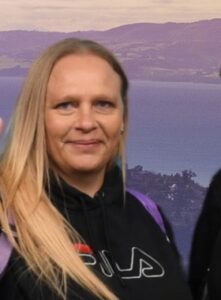
For Mariette Leeuw, the work she does today in social services is not defined by a single role or qualification, it is shaped by lived experience, resilience, and a deep understanding of what it means to navigate hardship.
Her journey spans continents, careers, and personal challenges, but at its core is a consistent focus: treating people with dignity, especially in their most difficult moments.
From Johannesburg to New Zealand
Mariette grew up in Johannesburg in a large, blended family, where she learned early on to navigate complexity and understand people from different walks of life.
In 2006, she moved to New Zealand with her husband and two daughters, building a new life in Aotearoa. Just two years later, she joined the Ministry of Social Development (MSD) as a Case Manager in Wainuiomata.
“It was a very real introduction to the work,” she says. “I was working with people facing poverty, family violence and significant challenges, and I could see those realities reflected around me as well. I was seeing those realities reflected in my own community and even in my own children’s lives.”
Growing a career in frontline social services
Her career evolved over time, including roles as a Health and Disability Case Manager in the Hawke’s Bay and later as a Fraud Intervention Officer.
Each role required careful judgement, clear communication, and the ability to work with people in often complex and sensitive circumstances.
But it was not only her professional experience that shaped her approach, it was also her lived experience.
Mariette has experienced domestic violence in both childhood and adult life, and has also navigated significant health challenges, including spinal surgeries and a breast cancer diagnosis during her studies.
These experiences have given her a deeper understanding of vulnerability and the importance of empathy when interacting with people utilising support systems such as MSD’s, when they are under stressful conditions.
“I understand what it feels like to be vulnerable and needing support,” she says. “It has made me very aware of how important it is that people are treated with dignity and listened to without judgement.”
It was this combination of professional experience and personal insight that led Mariette to pursue the New Zealand Diploma in Health and Wellbeing (Level 5 Applied Practice) with Careerforce.
Strengthening practice through Careerforce
For her, the qualification was not just about developing skills, but about deepening how she works with people.
She describes the qualification as different from previous training, because it encouraged her to think beyond process and procedure and focus more deeply on people.
“It wasn’t just about processes or procedures,” she says. “It was about understanding people more deeply and being more intentional in how I communicate and respond.”
Key learning areas such as trauma-informed practice, communication, and reflective thinking had a strong impact on her approach.
“One of the biggest changes was learning to slow down and really listen,” she says. “Not just to respond, but to understand what someone is experiencing. That shift has made a real difference in how I engage with people.”
Balancing study, work, and health
Completing the qualification while continuing full-time work and managing ongoing health challenges required resilience and adaptability.
During her studies, Mariette continued her role at MSD while also managing periods of treatment and recovery.
“There were times when I needed to adjust my pace and focus on recovery,” she says. “What helped was being honest about what I could manage and having support from both MSD and Careerforce. That flexibility made it possible to keep going.”
Her Careerforce Training Advisor, Tracey-Anne Cook, played an important role in helping her stay on track. Tracey-Anne’s guidance helped her navigate both academic requirements and personal circumstances.
“That support made a real difference,” she says. “It meant I could keep going without feeling overwhelmed.” “Having someone who understood the need to balance study with health and work made a huge difference.”
Staying connected to purpose
Despite challenges, Mariette says she never considered stepping away from her studies.
Instead, she stayed focused on the people she had supported throughout her career.
“I kept thinking about the people I had worked with over the years,” she says. “I remember situations where people trusted me with really difficult things – like family violence, illness, or really difficult situations. Those moments stayed with me. They reminded me why this work matters.”
Applying learning in everyday work
Today, Mariette continues her role as a Fraud Intervention Officer at MSD, engaging with people in complex and often sensitive circumstances.
She says her Diploma has strengthened her ability to approach interactions with empathy while balancing fairness and professionalism.
“I’m more intentional in how I communicate now,” she says. “Even in difficult conversations, I focus on making sure people feel heard and respected. That can make a real difference to how those interactions unfold.”
Looking ahead
For Mariette, completing the Diploma with Careerforce represents an important milestone in a much longer journey – one shaped by lived experience, learning, and a commitment to people. “It’s not just about qualifications or roles,” she says. “It’s about how we treat people in the moments that matter most.”
Interested in learning more about the Diploma?
Are you interested in taking the next step in your career? The New Zealand Diploma in Health and Wellbeing (Level 5) Applied Practice is designed for experienced support workers wanting to build advanced skills in working with people and whānau with complex needs. You’ll develop leadership, critical thinking, and applied practice skills while learning through real workplace experience.
For all media enquiries, please contact the Marketing and Communications & Insights team at [email protected].
Careerforce supports employers across New Zealand’s health and wellbeing sectors to run workplace training programmes, allowing staff to achieve nationally recognised qualifications on the job. For more information, please see: www.careerforce.org.nz
Daisy Hemmingson-White